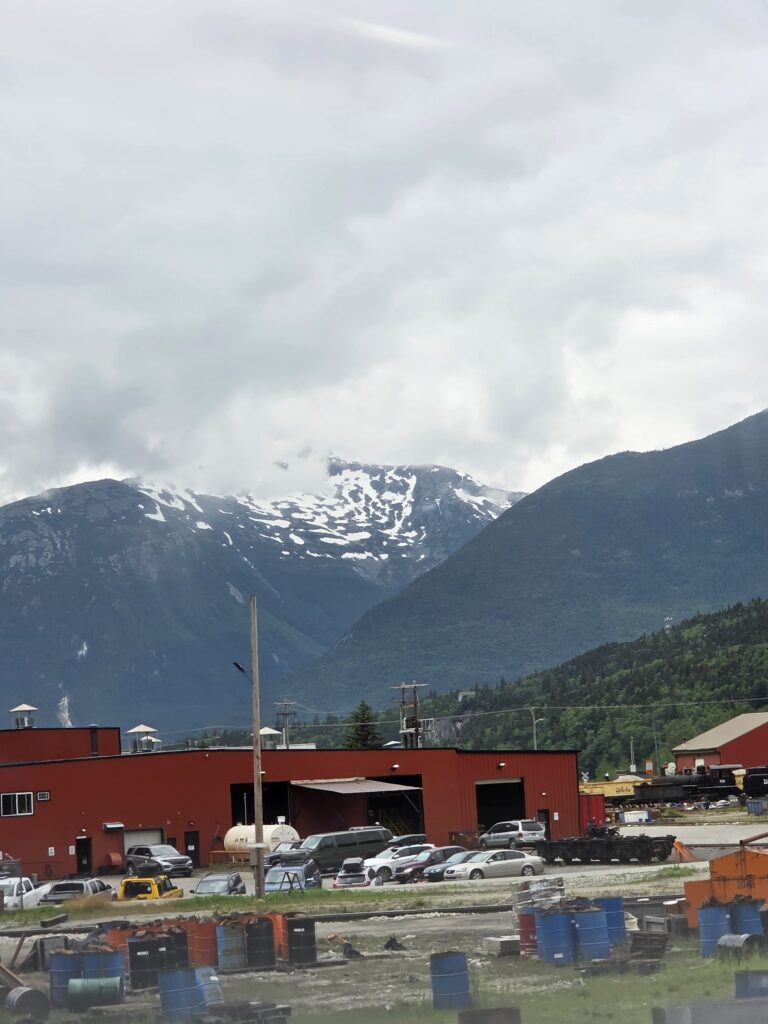
Skagway, Alaska was not a place I expected to feel so deeply about. I knew it would be beautiful. I knew there would be history. But I didn’t anticipate how strongly it would pull me in, slow me down, and make me think—not just about where I was, but about the people who once stood in the very same spot, staring up at the same mountains, wondering what came next. Skagway sits at the edge of Alaska in a way that feels symbolic. It’s nestled between towering mountains and icy coastal waters, and when you arrive, it feels almost untouched by time. The town is small, quiet, and framed by scenery so dramatic it barely feels real. Mountains rise steeply behind the buildings, often wrapped in fog or low-hanging clouds, and the water nearby reflects everything like a shifting mirror. It’s one of those places where you stop mid-step just to take it all in.
What makes Skagway truly special is its deep connection to the Klondike Gold Rush. This isn’t history that feels distant or polished for tourists—it feels lived in. Walking through town, especially along Broadway Street, felt like stepping into a preserved moment in time. The wooden boardwalks creaked underfoot, historic buildings lined the street, and it wasn’t hard to imagine the chaos and hope that once filled this small town. I spent time exploring the Klondike Gold Rush National Historical Park, and it completely changed how I understood that era. Reading about the stampeders—people who left everything behind chasing the promise of gold—was one thing. Standing in the place where it all began was something else entirely. These weren’t seasoned adventurers. They were ordinary people, many of them wildly unprepared, staring down brutal terrain with little more than hope and determination.
What struck me most was the contrast between the beauty of the landscape and the hardship it once represented. The mountains are stunning, but they are steep, unforgiving, and relentless. It’s hard to imagine attempting to cross them on foot, hauling supplies, with no guarantee of success. That realization stayed with me the entire time I was there. Skagway encourages you to slow down. There’s no rush, no pressure to do everything at once. I found myself walking more slowly, lingering longer, and paying closer attention to small details—the sound of the wind, the smell of the water, the way clouds moved across the mountains. Even when other visitors were around, the town never felt crowded. It felt shared.
One of the most unforgettable experiences was riding the White Pass & Yukon Route Railway. I had heard it was scenic, but nothing prepared me for how breathtaking it truly was. The train climbs nearly 3,000 feet in a relatively short distance, winding through mountains, along cliffs, and past waterfalls that seem to appear out of nowhere. As the train made its way upward, the views became more dramatic with every turn. Deep gorges opened below us. Snow-capped peaks appeared in the distance. Waterfalls spilled down rocky cliffs, some so close it felt like you could reach out and touch them.
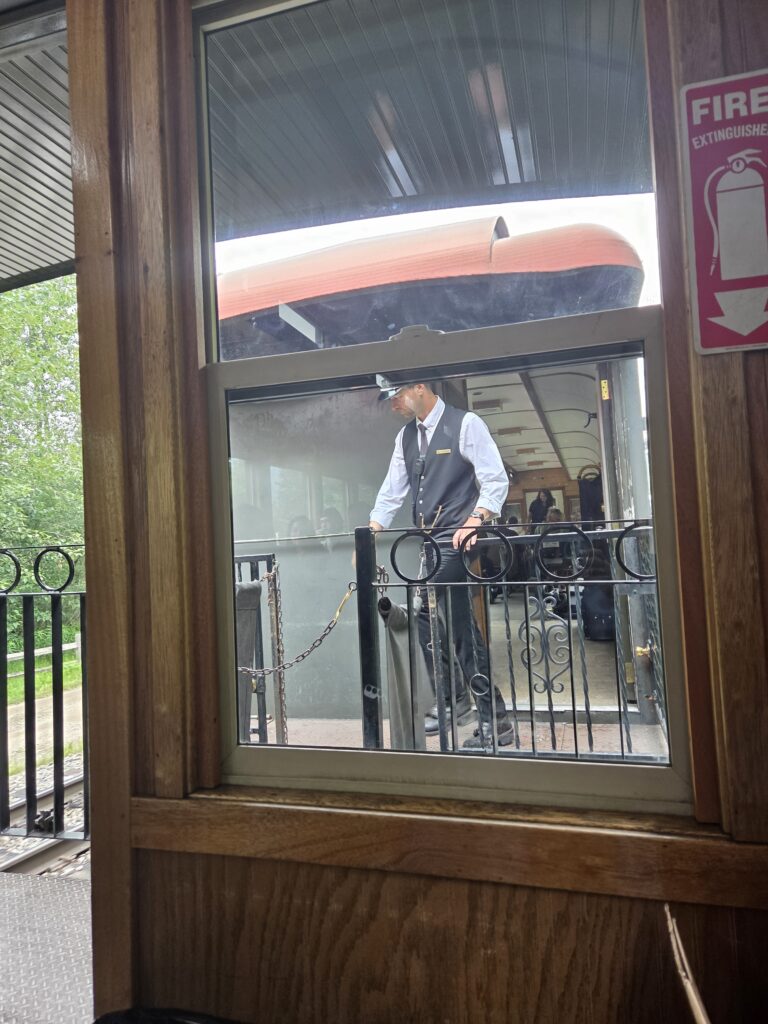
At times, it felt like the train was suspended between earth and sky. What made the ride even more powerful was knowing its history. This railway was built during the Gold Rush, carved into the mountains by hand under extreme conditions. Imagining the labor and determination it took to build something like this in such a harsh environment gave me a deep respect for the people who came before. It wasn’t just a scenic ride—it was a moving history lesson.
Back in Skagway, I leaned into the outdoors. This is a place made for exploration, whether you’re an experienced hiker or someone who just enjoys wandering scenic trails. The Chilkoot Trail carries a weight that’s hard to describe. This was one of the primary routes used by gold seekers, and even seeing parts of it made me pause. The trail is steep, rugged, and demanding. Walking it now, with modern gear and knowledge, still gives you a sense of how challenging it must have been.
Nature feels close in Skagway—never distant or decorative. Bald eagles were a common sight, perched high above or soaring effortlessly across the sky. Every time I looked up, it felt like there was something new to notice. The surrounding forests and waterways feel alive, constantly reminding you that you’re a visitor in a much larger ecosystem. When I wasn’t exploring, I enjoyed spending time in town itself. Skagway’s shops and cafés feel personal, not polished. There’s a sense of care and pride in everything—from handmade crafts to locally inspired artwork. I wandered without a plan, popped into small stores, grabbed coffee, and let conversations happen naturally.
Food in Skagway felt comforting and unpretentious. Meals weren’t about being fancy—they were about warmth, flavor, and slowing down. Sitting down after a long day of walking and hiking, looking out at the mountains or the water, made every meal feel earned. What stood out the most, though, was the small-town energy. People were friendly without being overwhelming. Conversations felt genuine. There was a quiet confidence in the town, like it knew exactly what it was and didn’t feel the need to prove anything. That kind of authenticity is rare.
As my time in Skagway came to an end, I realized how much the town had affected me. It wasn’t just the scenery or the history—it was the way everything worked together to create a feeling of perspective. Skagway doesn’t overwhelm you with attractions or activities. Instead, it invites you to be present. Leaving felt bittersweet. Skagway isn’t the kind of place you forget once you’ve been. It lingers. It stays with you through images of misty mountains, quiet streets, and stories of people who once stood there dreaming of something more.
Skagway reminded me that travel doesn’t always have to be about checking boxes or staying busy. Sometimes it’s about standing still long enough to listen. About feeling connected to a place and its past. About letting history, nature, and quiet moments do the talking. And Skagway speaks softly—but if you’re paying attention, it says everything.