For as long as I can remember, the Caribbean has existed in my mind as a kind of promise. Clear water that seems unreal in its color. Warm air that settles into your shoulders and asks you to slow down. A rhythm of life that feels gentler than the one most of us move through every day, always just slightly out of reach. What I didn’t expect from this seven-day cruise through the Caribbean wasn’t simply the beauty of the scenery or the novelty of island stops—it was how completely the experience altered my sense of time. Days stopped feeling segmented and scheduled, and instead began to flow together in a way that felt natural and unforced.
I didn’t go into this trip looking for transformation or answers. I wasn’t chasing a dramatic reset, a breakthrough moment, or an escape from anything specific. I just wanted space. Space to breathe without watching the clock. Space to rest without feeling like rest needed justification. Space to let days unfold as they wanted to, without constantly asking what came next or what I should be doing instead.
I booked this cruise on Norwegian Cruise Line because I wanted the chance to experience one of their ships for the very first time. I also made the decision to travel in a day before the ship set sail, something I’ve learned is always worth it. Arriving early meant I could stay close to the port and start the trip feeling relaxed instead of rushed—and it gave me peace of mind knowing that if there were any flight delays, my cruise plans wouldn’t be at risk.
Upon arriving in Miami, I checked into my hotel and took some time to explore a nearby restaurant, wanting to ease into the trip instead of rushing straight through it. I also double-checked that my ride to the port was scheduled and ready for the next morning—one less thing to think about. Miami felt electric in the way only departure cities do. There was movement everywhere—people arriving, people leaving, conversations layered on top of one another, the hum of anticipation thick in the air.
While standing at the port and looking up at the ship, I felt that familiar mix of excitement and surrender. After handing my luggage over to a port attendant, I made my way through security and check-in, officially stepping into the beginning of the journey. Once I was on board the ship like this, control softened. You unpack once. You stop worrying about directions. You don’t measure days by miles traveled, but by light, meals, and the movement of water beneath you. After finding my stateroom and setting my bag down, I remember pausing for a moment. There was nothing I needed to do immediately. No schedule demanding attention. That alone felt like a luxury.
The first day onboard felt like learning a new language—one made up of gentle movements, ocean air, and unspoken understanding. Everything was unfamiliar, yet strangely welcoming. Wide decks opened to endless stretches of blue, the horizon blurring the line between sky and sea. Lounges filled slowly as people found their own rhythms, claiming quiet corners or gathering near windows with drinks in hand. Conversations began easily, unforced, often with strangers who felt less like strangers than they ever would on land. There was a shared sense that we had all stepped out of our usual lives together, suspended in the same in-between space, with nowhere else to be but exactly where we were. Mornings became my favorite time. I would wake early, before the ship fully came alive, and step outside. The ocean stretched endlessly in every direction, and watching the horizon felt grounding. There’s something humbling about that much open space. It puts everything else into perspective.
I was genuinely thrilled by how much freedom I had around meals. I could set my own dinner time, choose between a casual buffet or a sit-down experience in one of the restaurants, and decide each evening what kind of pace I wanted. Meals stopped feeling like something to squeeze in between activities and instead became gentle markers of the day. Some dinners were lively and social, filled with conversation and shared stories, while others were quiet and reflective, moments where I let the day settle. I stopped rushing through my food. I lingered. I listened more than I spoke.
At night, the ship seemed to soften. Music drifted through the corridors, laughter carried from one space to another, and lights reflected off polished surfaces in a way that felt almost dreamlike. And always, beneath it all, there was the sound of the water—steady, reassuring, constant—reminding me that even while everything felt suspended, we were still moving forward.
The first time I stepped off the ship at Great Stirrup Cay, it felt like exhaling without realizing I’d been holding my breath. The colors were sharper than I expected. Blues layered on blues. The sand was so bright it almost hurt your eyes. I didn’t feel the need to rush toward anything. I walked slowly along the shore, letting the water lap at my feet. I watched people swim, laugh, and stretch out under the sun. The day didn’t ask for productivity. It asked for presence. I sat longer than I usually would. I swam without checking the time. I noticed how quickly my shoulders relaxed, how quiet my thoughts became. That island wasn’t memorable because of what I did there. It was memorable because of how little I felt the need to do. After my day at the beach on Norwegian Private Island. I headed back to the ship so that I could shower and put on some relaxing clothing to prepare for dinner.
Before I knew it it was morning and I was ready for breakfast and to see what I was going to get into for the day. One full day passed without land in sight, and unexpectedly, it became one of my favorite days of the trip. No port. No plans. Just the ocean in every direction. That kind of day exposes how uncomfortable we can be with stillness. At first, I felt the urge to fill it—check schedules, find activities, stay busy. But as the hours passed, something shifted. I sat and watched the water for long stretches of time. I read a few pages, then put the book down just to think. Conversations happened naturally, without urgency. Silence stopped feeling awkward and started feeling restorative. That day reminded me how rarely I allow myself to do nothing—and how deeply I need it.
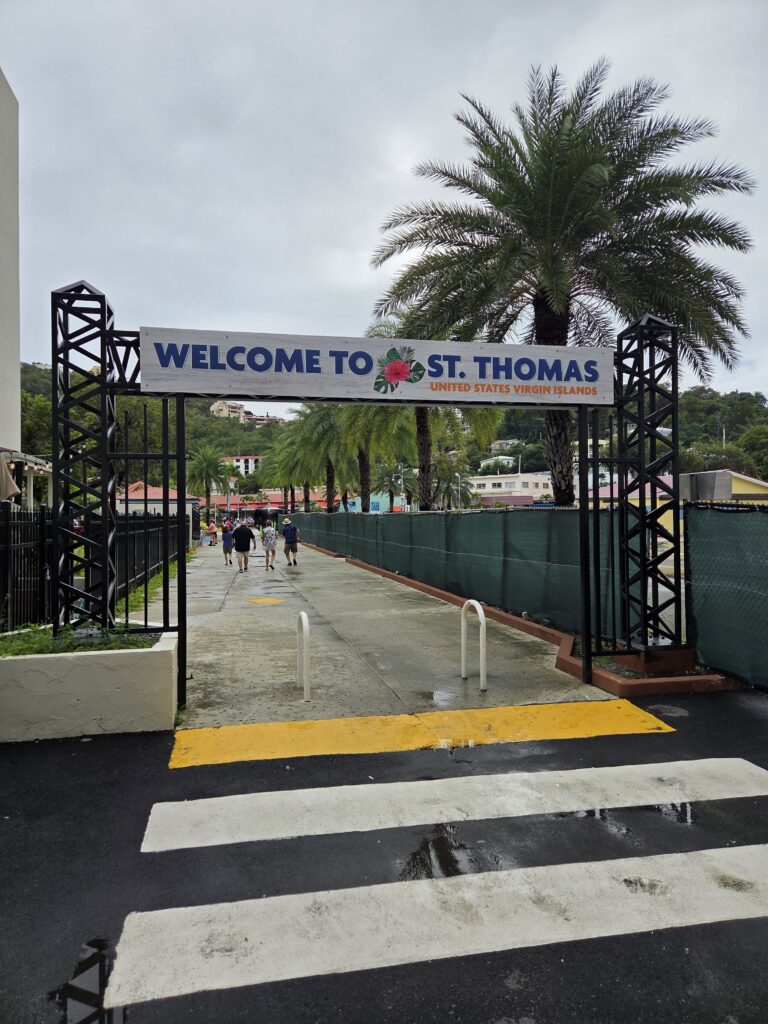
After having breakfast. It was time to get off the ship. We had finally made it to our next destination St. Thomas. St. Thomas greeted us with warmth in every sense of the word. The air felt heavier, scented with salt and sun. The island buzzed with color—buildings, water, clothing, movement. I wandered through local areas, noticing how life continued at its own pace regardless of visitors. Music drifted through open spaces. Conversations felt easy. There was a sense of openness that made interaction feel natural rather than transactional. The beaches framed by turquoise water invited rest, but it was the people that made the island feel alive. Even brief exchanges carried warmth. It felt less like visiting and more like being welcomed, even temporarily. I had a chance to shop before heading back to the ship. St. Thomas reminded me that places are shaped as much by their energy as by their landscapes.
Our next stop on this beautiful ship was Tortola. Tortola felt like a pause between louder moments. Lush, green, and gently rolling, it offered a quieter beauty. The air felt cooler. The pace felt slower. Here, I felt drawn to nature rather than activity. Hills framed wide views. The water felt calmer. Time seemed to stretch. I noticed how easily my mind settled here. Thoughts came and went without sticking. It was the kind of place that didn’t demand attention but rewarded it. Tortola stayed with me because it didn’t try to impress. It simply existed—and that was enough for me.
Now that we are at our last port. I didn’t know what to do in Puerto Plata. Puerto Plata carried a different energy. There was movement here, history layered into architecture, streets that told stories whether you knew them or not. I felt more alert walking through this port, more observant. The contrast between past and present was visible everywhere. Beaches existed alongside reminders of everyday life, creating a fuller, more complex experience. This wasn’t a place that felt curated. It felt lived in. And that authenticity made it memorable. I really enjoyed my day here. As I head back to the boat. I did a little more shopping and just enjoyed my surroundings.
After being on the boat for seven days. Every evening, returning to the ship felt like coming home. Familiar hallways. Familiar views. Familiar routines that had quietly formed over the week. Some nights were lively, filled with music and conversation. Other nights were quiet, spent standing on deck under a sky scattered with stars, listening to the ocean move beneath me. There was comfort in knowing the ship would carry us through the night, steady and sure. The final full day arrived softly. By then, the ship felt known. Favorite spots had been claimed without thought. Morning routines unfolded naturally.
By then, reality was beginning to settle in. The trip was quietly moving toward its end. Packing happened slowly—intentionally. I folded clothes with care, pausing often, not because I needed the time, but because I wasn’t ready to rush the goodbye. I took breaks to step outside and take in the view one last time, letting the ocean stretch out in front of me as if it might imprint itself in memory. I lingered longer than necessary in familiar places—the deck where mornings had started, the quiet corners that had become small comforts.
That final day felt deeply reflective, almost suspended in time. Gratitude sat quietly alongside the growing awareness that this rhythm—this ease I had settled into—would soon give way to something faster, louder, and more demanding. I moved through the day with intention, aware that each small moment carried a sense of finality. Packing became less about folding clothes and more about acknowledging what the trip had given me. I paused often, sitting on the edge of the bed or stepping outside, letting the ocean fill the space one last time.
When I finally finished packing, it felt deliberate rather than rushed. I went to dinner and savored it differently now, paying closer attention to the atmosphere, the familiar sounds, the simple comfort of being there. Everything felt softer, more meaningful, because I knew it was temporary. Later, I placed my bags outside the door for the attendant to take down, a small but unmistakable signal that the journey was ending. Closing the door behind me felt like closing a chapter—one I already knew I would miss, not just for where it took me, but for how it had changed the way I moved through each day.
This trip didn’t overwhelm me with moments. Instead, it offered something quieter and far more lasting. It reminded me how powerful it can be to slow down. How much clarity emerges from unstructured time. How connection deepens when conversation isn’t rushed or treated like something to check off a list. Somewhere between leaving Miami and returning home, that space quietly did its work. There was no grand realization or dramatic turning point—just a gradual settling into a slower rhythm, one that felt natural and grounding, and one that stayed with me long after the ship turned back toward shore.
Coming home, I became aware of how quickly life tries to speed up again—and how intentionally I now push back against it. Long after the suitcases were unpacked and the photos tucked away, the feeling of this trip remained. It surfaced in quiet moments, in pauses I allowed myself to take, in the way I listened more carefully and moved more deliberately through my days.
For as long as I can remember, the Caribbean had lived in my mind as a promise—a place of clear water, warm air, and a slower rhythm of life that felt just out of reach. What I didn’t realize then was that the rhythm itself was what I would bring home. This journey didn’t end when the ocean faded from view. It continues quietly, shaping the way I move through the world, reminding me that time doesn’t have to be conquered or managed—it can be inhabited. And that, more than any destination, is the kind of promise that lasts.