Sitka, Alaska wasn’t loud about its beauty. It didn’t announce itself with towering crowds or nonstop activity. Instead, it unfolded slowly, quietly, and honestly—and that’s exactly what made it unforgettable. From the moment I arrived, it felt like a place meant to be experienced at a gentler pace, where nature, history, and everyday life exist side by side without competing for attention.
Sitka sits on Baranof Island, surrounded by the Tongass National Forest, and it feels deeply rooted in its surroundings. Mountains rise behind the town, forests press in close, and the water is never far away. It’s the kind of place where you’re constantly aware of the natural world, even when you’re just walking through town. The air feels cleaner. The silence feels intentional. Everything seems to move in rhythm with the tides and the weather.
What immediately stood out to me about Sitka was how layered it is. This isn’t just a scenic coastal town—it’s a place shaped by centuries of culture and change. Sitka carries strong Tlingit roots alongside visible reminders of Russian influence, and those histories don’t feel hidden or glossed over. They’re present, acknowledged, and woven into everyday life.
One of my first stops was Sitka National Historical Park, and it set the tone for the rest of the trip. Walking among the towering totem poles was both grounding and humbling. Each one tells a story, and even without knowing every detail, you can feel the weight of history in them. The trails through the park are peaceful, surrounded by towering trees and soft forest sounds, and it felt like a place meant for quiet reflection rather than rushing through with a camera. Learning about the Tlingit people—their traditions, resilience, and deep connection to the land—added so much depth to my understanding of Sitka. This isn’t history that feels distant or abstract. It’s alive, respected, and still shaping the community today.
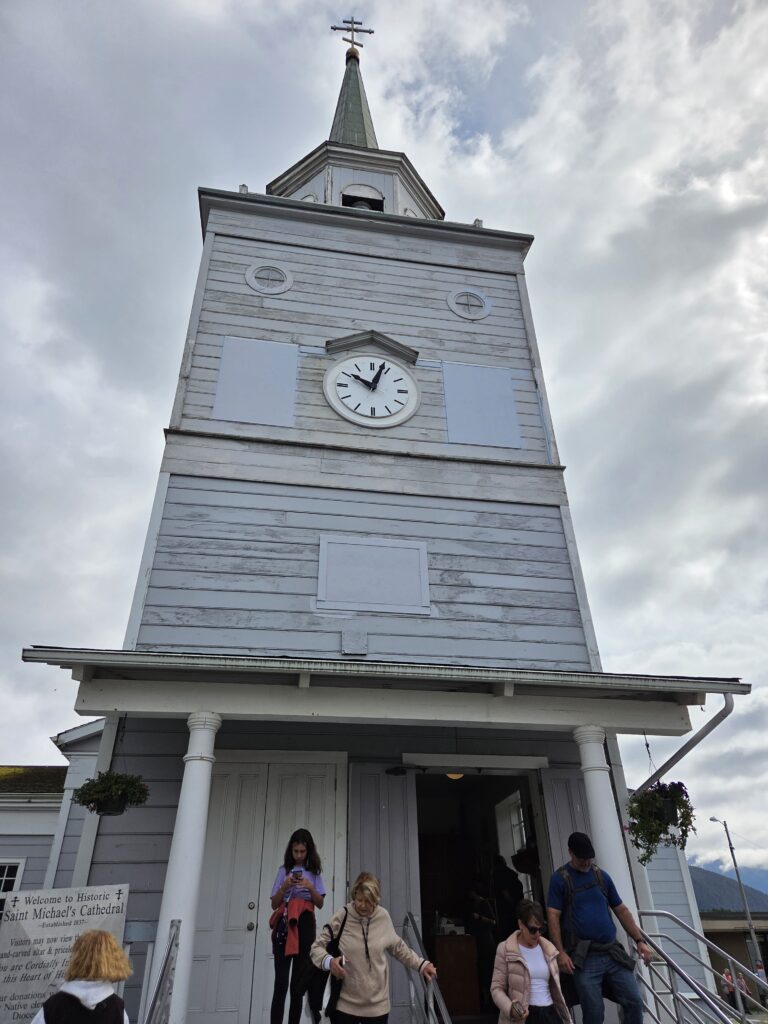
The Russian influence in Sitka is equally fascinating. Visiting St. Michael’s Cathedral, with its onion-shaped domes and traditional Orthodox design, felt almost surreal against the Alaskan landscape. It’s a reminder that Sitka once served as the capital of Russian America, and that chapter of history still leaves a visible mark. The Russian Bishop’s House added even more context, offering a glimpse into daily life during that era. Walking through these historic spaces made Sitka feel like a crossroads of cultures rather than a single story.
Sitka’s connection to wildlife is impossible to ignore. It’s not something you have to search hard for—it just appears. Bald eagles seemed to be everywhere, perched on rooftops, soaring overhead, or circling the harbor. At one point, seeing them became so normal that I had to remind myself how rare that would be anywhere else.
Being near the water brought even more unforgettable moments. Watching sea otters floating on their backs, completely unbothered by the world, was unexpectedly calming. They drifted in groups, cracking shells on their bellies, completely at home. It was impossible not to smile watching them.
The highlight, though, was seeing whales. There’s something deeply moving about spotting a humpback whale in the wild—watching it surface, exhale, and disappear beneath the water again. It doesn’t feel like a performance. It feels like a privilege. I found myself holding my breath without realizing it, wanting to stay as quiet and still as possible, as if that somehow mattered.
I also spent time at the Alaska Raptor Center, which gave me a new appreciation for the care and effort that goes into wildlife rehabilitation. Seeing these powerful birds up close—especially knowing many had been injured and were being given a second chance—was emotional in a way I didn’t expect it. It was one of those experiences that stays with you long after you leave.
Outdoor time in Sitka felt less like adventure and more like immersion. Hiking didn’t feel rushed or competitive—it felt personal. Trails like Mount Verstovia offered incredible views, but what I loved most was the journey itself. The forest, the quiet, the way the light filtered through the trees—it all encouraged slowing down. Even shorter walks felt meaningful.
Kayaking along the coastline was another standout experience. Gliding over clear water, surrounded by forested shoreline and distant mountains, felt peaceful in a way that’s hard to replicate elsewhere. The water was calm, the air cool, and everything around me felt balanced. It was one of those moments where you don’t think about taking photos—you just sit with it.
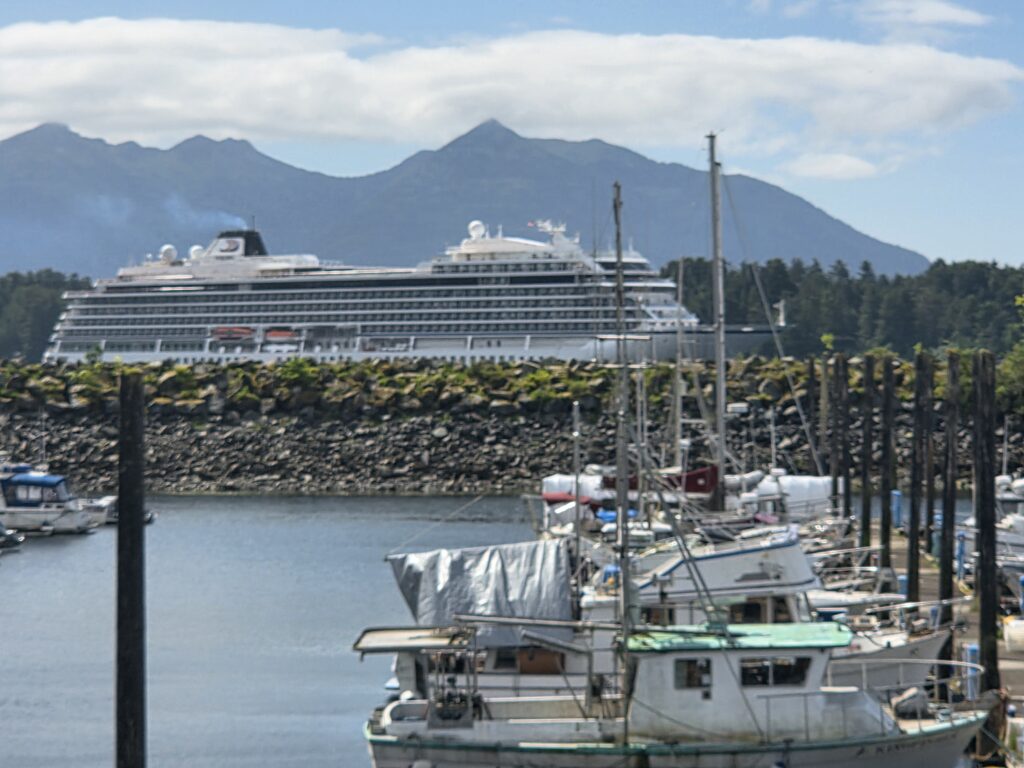
Now fishing is a huge part of life in Sitka, and even as someone who isn’t an avid angler, I could feel how deeply connected the town is to the water. Salmon and halibut aren’t just menu items—they’re part of the rhythm of life here. That connection showed up everywhere, especially when it came time to eat. The food in Sitka was exactly what it should be: fresh, simple, and deeply satisfying. Seafood was the star, of course. Every meal felt thoughtful without being fancy. Whether it was grilled salmon, halibut tacos, or rich chowder, the flavors felt honest. Meals often came with views of the harbor, boats rocking gently in the water, and mountains looming quietly in the background.
What surprised me most about Sitka wasn’t any single experience—it was the feeling of the place. Sitka doesn’t rush you. It doesn’t overwhelm you. It invites you to exist alongside it, to observe rather than conquer. Time feels softer there. Conversations feel unforced. Even the weather seems to have its own mood, and instead of fighting it, people adapt.
By the time I left, I realized Sitka had given me something I didn’t know I needed. A reminder that travel doesn’t always have to be loud or packed with activity. Sometimes, the most meaningful trips are the ones that allow space—for reflection, for stillness, for appreciation. Sitka stayed with me long after I left. In the quiet moments. In the memory of misty mornings, eagle calls, and water lapping against the shore. It’s a place that doesn’t try to impress you—but somehow, it does anyway. And honestly, those are the places that tend to matter the most.