I didn’t realize how much I needed a place like Juneau, Alaska until I was actually there. Before the trip, I knew the basics: glaciers, whales, mountains, cold air, dramatic scenery. What I didn’t expect was how deeply it would slow me down. Juneau isn’t loud. It doesn’t compete for your attention. It just exists—quietly powerful—and invites you to meet it at its pace.
Juneau is Alaska’s capital, but it doesn’t feel like a capital city in the way most people imagine. There are no major highways connecting it to the rest of the state. You can only get there by plane or by boat, and somehow that makes arriving feel intentional, like you’ve crossed into a place that’s slightly removed from the rest of the world. The moment I stepped off the plane, I felt it. The air was colder, cleaner, sharper. The mountains seemed closer than they should be.
Everything felt real in a way that’s hard to explain unless you’ve been somewhere truly wild. What struck me first was how tightly Juneau is wrapped into its surroundings. The city doesn’t sprawl—it fits where it can, tucked between the mountains and the water. Everywhere you look, there’s evidence that nature still leads here. Clouds roll in fast. Rain comes and goes without warning. The landscape doesn’t adjust to people; people adjust to it. And honestly, that was refreshing.
One of the most unforgettable experiences was visiting Mendenhall Glacier. I had seen photos before, but they didn’t prepare me for the scale of it. The glacier stretches for miles, this massive river of ice carved into the valley. The color alone stopped me in my tracks—soft blues, deep whites, streaks of gray where time has pressed in. Standing there, you feel small, but not insignificant. More like humbled.
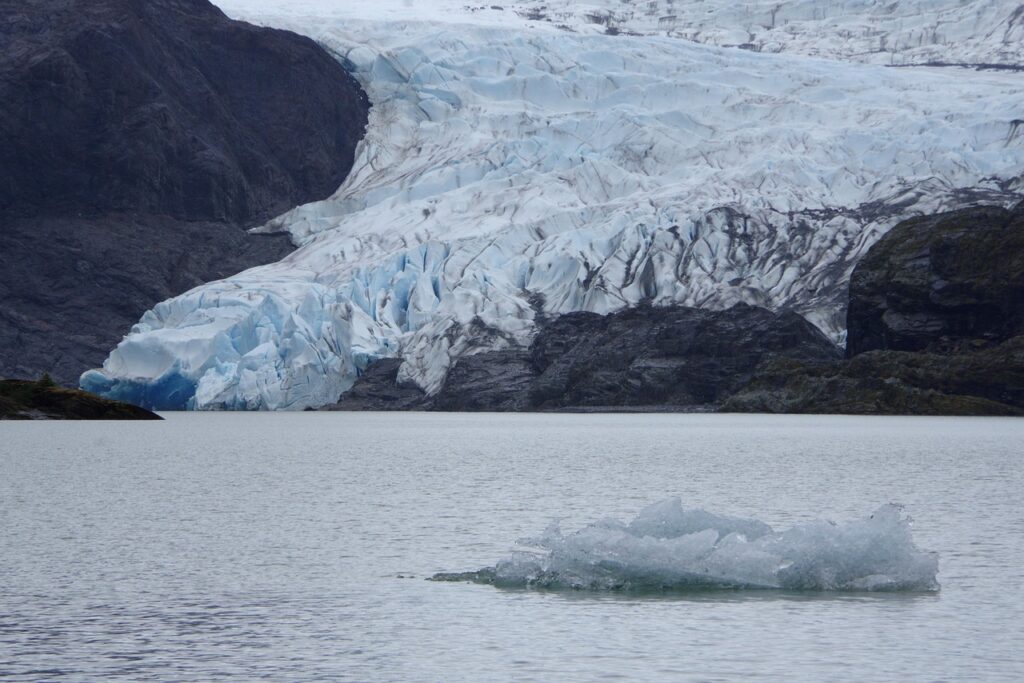
I walked the trails around the glacier slowly, not because they were difficult, but because everything around me felt worth noticing. The sound of water rushing from melting ice. The wind moving through the trees. The quiet crack and shift of the glacier somewhere far off. Nugget Falls thundered nearby, powerful and constant, and I found myself just standing there longer than planned, watching the water crash down as if it had been doing this long before I arrived—and will long after I’m gone. There’s something grounding about being in a place that doesn’t need you. A place that isn’t curated or polished. Mendenhall Glacier doesn’t perform. It just exists, and you’re lucky enough to witness it.
Then there was the whale watching, which I still don’t have the right words for. You think you’re prepared. You know whales are big. You’ve seen videos. But nothing compares to being out on the water, scanning the surface, waiting—and then suddenly seeing a massive humpback rise out of the ocean. The sheer size of them takes your breath away.
There’s a moment of silence when it happens. Everyone notices at the same time. Cameras pause. People point but don’t speak too loudly, like we all collectively agreed not to disturb the moment. Watching a whale breach or slap its tail against the water is thrilling, but there’s also something deeply peaceful about it. These animals are doing what they’ve always done, completely unaware of how extraordinary they are to us. We saw humpbacks multiple times, along with sea lions lounging on rocks and bald eagles soaring overhead. Bald eagles, everywhere. In most places, seeing one feels special. In Juneau, it becomes almost normal—which says a lot about where you are.
Back on land, I spent time hiking, which felt less like exercise and more like exploration. Juneau has trails for every level, but what they all have in common is scenery that doesn’t quit. I hiked parts of the Mount Roberts Trail, and the higher I climbed, the quieter everything became. Looking down at the city from above, it felt small and peaceful, nestled into the landscape rather than dominating it. Even the simpler trails were memorable. Moss-covered forest floors, towering trees, soft ground underfoot. The kind of environment that makes you instinctively lower your voice, even when you’re alone. Alaska’s wilderness doesn’t rush you—it invites you to listen.
Downtown Juneau has its own kind of charm. It’s walkable and colorful, with historic buildings that feel worn in, not worn out. Places like the Red Dog Saloon lean into their personality unapologetically. It’s quirky, loud, and full of stories, and whether you step inside or just pass by, you feel the layers of history baked into it. I also took time to learn more about Alaska Native culture and history, which added an important layer to the trip. Juneau isn’t just a gateway to natural beauty—it’s a place shaped by generations of people who have lived with this land, not on top of it. Understanding that made everything else feel more meaningful.
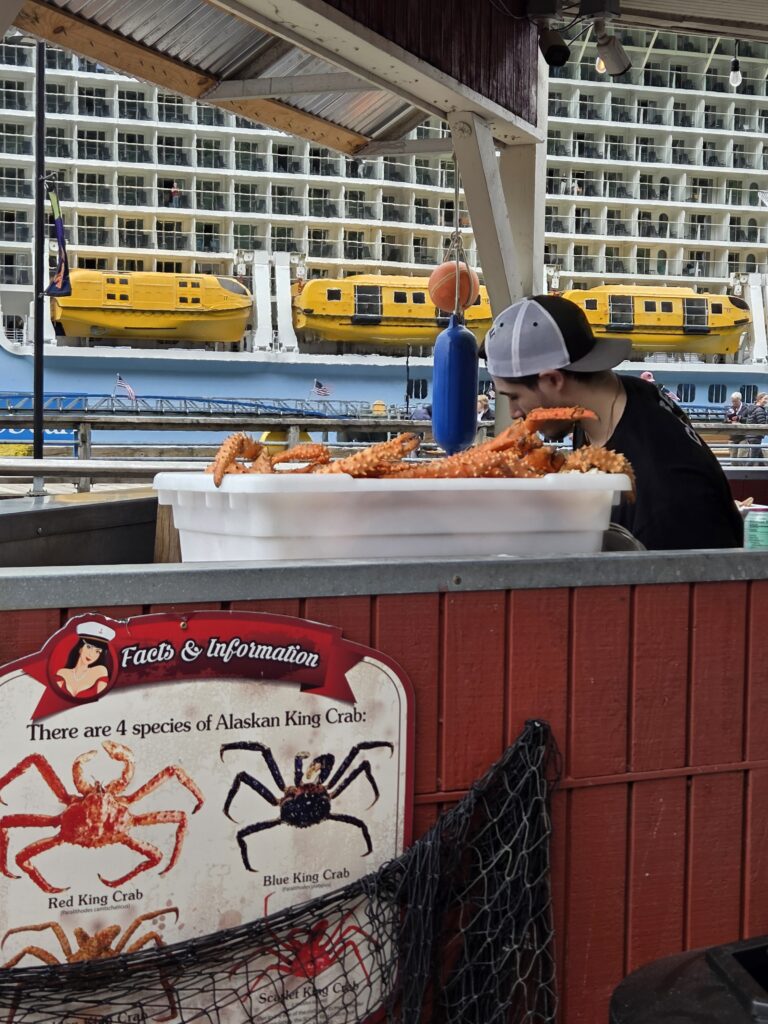
The food in Juneau was simple and satisfying in the best way. Fresh seafood was everywhere, and meals often came with views of the water that made you slow down whether you planned to or not. There’s something about eating a warm meal while looking out over cold water and mountains that makes everything taste better. Nothing felt rushed. Meals were moments, not just refueling stops. But what I appreciated most about Juneau wasn’t a specific attraction—it was the pace. Time feels different there. Weather influences plans, and instead of fighting it, people adapt. Rain doesn’t ruin a day; it just changes it. Clouds don’t disappoint; they add drama. Life doesn’t feel optimized—it feels lived.
By the end of the trip, I noticed I was sleeping better. Breathing deeper. Checking my phone less. I wasn’t trying to capture every moment—I was actually in them. And that might be the greatest gift Juneau gives you without even trying. When it was time to leave it was harder than I expected. Not in a dramatic way, but in a quiet, lingering one. Juneau isn’t flashy. It doesn’t beg you to come back. But once you’ve been, part of you understands why people do.
Juneau reminded me how powerful nature is, and how calming it can be to step into a place where you’re not the center of everything. It’s a destination that stays with you—not because of what you did, but because of how it made you feel. Slower. Smaller. More present. And honestly, that feeling is something I’m still carrying with me long after coming home.